Sunday, February 04, 2007

Anytime, Anywhere

One of the most challenging components of this film (shooting with no budget while working full time and wrestling with a vast and complicated narrative notwithstanding) is the disappointment of hearing my heroes say, "No thanks" to my requests for their participation.

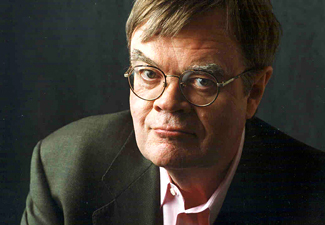
Our track record has been really good. Amy Hollingsworth, Bo Lozoff, Tim Madigan, Susan Stamberg, Tim Russert, Marc Brown and Linda Ellerbee agreed in a heartbeat to participate. In the last few weeks, though, we've met some resistance with Bill Moyers and Garrison Keillor.

What follows is my latest appeal to Mr. Keillor:

    Thank so much for following up, [Name Redacted].

    Given that our documentary is, at its core, an exploration of depth and simplicity in modern culture -- a subject on which Mr. Keillor's perspective is unique and undisputed -- is there any possibility that diminishing the urgency of our ask and duration of our proposed interview might improve the odds that Mr. Keillor reconsider?

    Example, is there any chance we could do a three-minute stand-up backstage prior or subsequent to one of Mr. Keillor's Town Hall performances in March? Of course, we will gladly travel anywhere, anytime, I just want to introduce the possibility of quickly asking Mr. Keillor to comment on the value of good, old fashioned, unhurried storytelling in this accelerated, short-attention span age.

    In summary: backstage, no set up, three minutes, pure intentions and huge gratitude.

    Most sincerely, and most hopefully yours,

    Benjamin Wagner
I have no doubt that these gentleman will make excellent contributions to our exploration of seeking, finding, and creating substantive communication in these vacuous times, so I haven't thrown in the towel on either of them.

All I can do is hope that some small small bit of light from this most geniuine, most heartfelt mission can shine through my letters and emails, and inspire them, in some way, to remember their thirties, remember their struggles, and lend a helping hand to a well intentioned, complete stranger.

Thursday, February 01, 2007

The Optimism Of The Will


"My name is Benjamin Wagner," I said, shaking Bill Moyers' hand firmly. "I am the young man with the fire in his belly who has been doggedly pursuing you for my deep and simple documentary about my relationship with Mister Rogers."

"Oh yes," he said, looking up from under his glasses. "Oh yes."

* * *

I was leading a meeting on viral marketing late this afternoon when the email hit my inbox. "Seems Bill is taking action on the UWS!" Abbi wrote. She had happened upon a blurb about the PBS documentarian's activism against Upper West Side development (see "Historical Society Throwdown on the UWS"), revealing in the process that the PBS documentarian (and elder statesman for all that is good and right) is also my neighbor.

"And," she followed, "It seems he'll be at Barne's & Noble tonight!"

I cancelled my plans ("I've just learned Bill Moyers is doing a reading on 17th Street at 7pm," I wrote Chris, Tony and Ryan. "I HAVE to go for my film; we've been trying to interview him for months"), and raced through the remainder of the day nervous like a schoolboy after learning of a pop quiz.

The moon was full and buffeted by billowing clouds as I walked through Union Square. As I approached Barnes & Noble, I spotted a sign in the window that read

    The New School Presents:
    Democracy In Media
    Moderated by Bill Moyers
    Featuring
    Walter Isaacson, Michael Massing, and Ann Deavere Smith

Just inside the door, a display touted Mr. Moyers recent book, "Welcome To Doomsday," as well as his best seller, "Moyers On America." I grabbed copies of both, and then climbed three flights where a gathering of two hundred PBS die hards were already seated. I found a seat in the front row, took off my jacket, pulled my notebook and camera out of my bag, and waited.

The panel, featuring former CNN Chairman and current CEO of Aspen Institute Walter Isaacson, Columbia Journalism Review editor Michael Massing, and playwright, actor and Stanford professor Ann Deavere Smith, took the stage mere moments later. I smiled to myself when I spotted Mr. Moyers, certain that, as the youngest audience member in the front row, if not the room, he would think right away, "There's that pesky documentary kid."

The group tackled the weighty subject of the role of media in a democratic society, the risks of that role, and its recent failures, with insight, enthusiasm, and humor.

"Media exposure," Mr. Moyers said, "is the common denominator of ambition."

"Real news," he followed, quoting playwright Tom Stoppard, "Is the news we need to keep our freedom."

Through the panel's exploration of consumerism ("In a business society as we are, commercial considerations infiltrate and subvert almost every institution," Mr. Moyers said), media consolidation ("Are we too obsessed with what may be an obsolete form of mass communication?" he asked), poor reporting ("I really believe the dearth of good reporting is the greatest danger to journalism," Isaacson said), consumer disenfranchisement ("Maybe we've grown to comfortable?" Ms. Smith mused), and the subtleties of post September 11 censorship ("I call them the "patriotism police" Mr. Isaacson said), I kept asking myself, 'What are you doing still working for The Man?'

When the panel yielded the floor to questions, I fantasized about dashing for the mic, identifying myself to Mr. Moyers and asking, "So what do I do?" When I turned to spy a line of questioners thirty septuagenarians deep, I reconsidered. One audience member asked, "What do you tell young journalists?"

"The opportunity to be creative and signify are fewer and fewer," Mr. Moyers responded. "But if you have the fire in the belly and you feel the fire by reporting upon that which you see around you, then stay with it. Never give up hope."

As the panel wound down, it revealed its disparate perspective: Issacson, the technological optimist; Massing, the academic pessimist; and Smith, the hopeful centrist.

"I have to first differentiate for you between hope and optimism, because I think there’s a difference," she said. "And this is from someone some of you know fairly well, Cornell West, the scholar? He says,

    Optimism and hope are different.

    Optimism tends to be based on the notion that there's enough evidence out there that allows us to think that things are going to better, much more rationale, deeply secular. Whereas hope looks at the evidence and says it doesn't look good at all, says we're going to make a leap of faith, go beyond the evidence and attempt to create new possibilities that become contagious to allow us to engage in heroic actions, always against the odds, no guarantees whatsoever. That's hope.


Mr. Moyers, then, supplied the final word.

    There's an Italian philosopher who's had a big influence on me, his name is [Antonio] Gramsci. He talked about practicing pessimism of the mind and the optimism of the will, and by that he means -- and I take this as a journalist -- my job is to look around and describe the world as it is without any whitewash or illusions or romance. To say, "This is how the world looks. This is what's happening in the world." That's the pessimism of the mind. To look around and see that all the signs add up to potential calamity, whether it's global warming or the clash of civilizations or the uncompromising nature of present American politics.

    But, as a human being, as a father, as a husband, as a citizen, I don't know how to live in the world except to expect a more confident future and then, get up every morning and try to do something to bring that future about. That's the optimism of the will. I will myself to try to change the realities that I see that are so disturbing.

Moments later, when the applause gave way to a dull chatter, I was third in line for Mr. Moyers' signature. My heart was in my throat as I repeated my introduction over and over in my mind. Soon, I was standing before him -- the man whose wisdom and insight I have been seeking for months -- extending my hand.

"My name is Benjamin Wagner," I said, shaking Bill Moyers' hand firmly. "I am the young man with the fire in his belly who has been doggedly pursuing you for my deep and simple documentary about my relationship with Mister Rogers."

"Oh yes," he said, looking up from under his glasses. "Oh yes."

"It's a pleasure to meet you," I followed. "And to hear you speak."

"Well thank you he said," scribbling in my book.

"I hope you can understand my tenacious pursuit," I said.

"You know," he replied almost sheepishly, "I just don't know that I have anything to say."

I paused a beat, speechless, then squawked, "All right. Thank you."

"Talk to... talk to..." he said, looking at the line behind me.

"All right," I said stepping away. "Thank you."

"All right," he finished.

I walked away swearing at myself. 'Talk to whom?' I wondered, navigating the crowded room. 'Talk to whom!?!'

I rode the escalator three flights, paid for the book, and pulled on my jacket, all the while assaulting myself for being such a coward. 'Speak truth to power!' I said to myself. 'You idiot.'

On the street, I put on my headphones, but didn't push play. 'Mister Rogers called for daily reflection,' I thought to myself. 'Don't drown out your thoughts with music.'

I beat myself up all the way to the subway, frowning when I caught glimpses of myself in car windows. 'You failed,' I thought. 'You failed.'

Waiting for the 1 inside the 18th Street station, I opened my copy of "Moyers On America," and read the inscription.

"For Benjamin," it read.

His cursive was thin, long, and as unreadable as a doctor's. I puzzled. An allowed spirit? An alloy spirit? An aligned spirit? And then it hit me.

    For Benjamin,
    A kindred spirit
    Bill Moyers

I continued beating myself up as the train headed uptown. Somewhere between Times Square and 72d Street, though, I thought, 'You should have asked Mister Rogers what to say. You should have asked Mister Rogers for help.'

And then, staring out the window through my reflection I head his voice in my head.

"You're doing fine, Benjamin," Mister Rogers said. "You're doing fine."

Strike Two

Dear Benjamin,

I wanted to let you know that I heard back from Garrison in regard to the documentary you are doing on Fred Rogers.

First of all, I would like to thank you very much for thinking of Garrison as a component of your project. It is always nice to be held in high esteem, and your interest in him as a source is very much appreciated. However, at this time, Garrison’s schedule is incredibly busy with broadcasting the show and writing a book. Unfortunately, he simply does not have the time to do everything, as much as he would like to. As a result, he is going to have to respectfully decline your gracious invitation. We hope you can understand and accept our apologies.

Please contact me with any questions or concerns.

Best regards,

[Name Redacted]

Thursday, January 25, 2007

Part II, Or, Angels In The Architecture


As much as I remember learning how to write a persuasive essay in 8th grade English, I don't exactly remember the core tenants of crafting such a document. Still, I think I kind of nailed it here.

I've been drafting this response since Mr. Moyers emailed us last week to say no thanks, reading and re-reading, writing and re-writing, until just a few seconds ago when I finally hit "Send."

    Dear Mr. Moyers:

    I appreciate your thoughtful response, and understandable reticence to participate in our documentary, "Mister Rogers & Me." Your "retirement” must be the most productive and least restful in the history of television. Still, I’m sure that I was not alone cheering the news of your return to PBS. Your truth seeking is more valuable now than ever, as you demonstrated again with your fiery, spot-on speech at The National Conference For Media Reform.

    Your thesis there -- that media consolidation, the sale of politics, and the widening gap between rich and poor have narrowed the message so that "what we see from the couch is overwhelmingly a view from the top" -- is central to our film's exploration of accelerated culture's shallowness, and complexity.

    Mr. Moyers, I am not alone in considering your wisdom a key component to any well-rendered exploration of depth and substance. Last week, at the conclusion of an interview for our film, Linda Ellerbee said -- unprompted -- "You should really talk to Bill Moyers. Nobody gets this stuff better than him."

    Because you are so thoroughly and understandably over-committed, though, please consider speaking with us for just five minutes anytime between now and June 1 at the location of your choice. It could be a stand-up on a street corner, a press event -- anything, anytime, anywhere.

    Fred Rogers' 1969 congressional testimony helped secure $20M in funding in support of the fledgling Corporation for Public Broadcasting. Likewise, your intellectual capital will lend considerable heft to the coffers of our documentary's argument.

    You once said "God works in the wedges, through the cracks, along the fault line of schisms, until conformity and orthodoxy can no longer hold the mind hostage to habit or the spirit captive." To that end, Mr. Moyers, I appeal to you avail us just five minutes to lend aid to our small but soulful effort to fight the good fight.

    Most Sincerely,

    Benjamin Wagner

The last quote -- an excerpt of his retirement dinner of University of Durham Lightfoot Professor of Divinity James Dunn -- absolutely floored me. Great acts, seismic upheavals begin in small and mysterious ways.

It reminded me of Bo's story about angels and crack in the firmament. Chris and I had spent all day with Bo, pacing the grounds of the Human Kindness commune. Our minds were blown by the depth and breadth of Bo's work, and insight. He told us this story just as the sun was settling over the North Carolina hills.

    At one point in C.S. Lewis', The Great Divorce, he says to this angelic guy, "If you angels are so full of compassion, and have a world so full of compassion, why aren’t you down there on earth? Everybody is so miserable down there."

    And the angel says, "You see that little crack in the Earth near you foot that the ants are crawling in?”

    And C.S. Lewis looks down and he says, "Yes."

    And the angel says, "You're entire world, everything you call your universe, all of the history, future, from dinosaurs to the end of the world -- it’s all in that little crack. There's only been one of us that's had the ability to fit down there."

    And of course he’s talking about Jesus Christ.

    So he says, "We have to wait until you are willing to grow. We just can’t fit."

    I’ve seen in my own mystical experiences, and I think it’s a very relevant metaphor. This world of good and evil is in that crack at your foot. And this world of eternal goodness, of holiness, is like the size of the sun. It's the size of the galaxy.

Wednesday, January 24, 2007

This Blog Is Not Yet Rated


Standing there with Mister Rogers looking out at Madaket Bay so many years ago,I never would have guessed that one conversation about depth and substance would lead me rethink so many concepts that I held to be self evident.

Take choice.

I just finished watching "This Film Is Not Yet Rated," director Kirby Dick's exploration of the MPAA's rating system.

The MPAA (Motion Picture Association of America) is a non-profit trade association based which was formed to advance the interests of movie studios. They're responsible for the well-known film rating system: G, PG, PG-13, R, NC-17.

The difference between an R or NC-17 rating can make or break a film. The criteria upon which films are rated, however, is secret. As are the voting members. As is the distinction between blood and gore rating PG, and sex rating R.

And get this.

The MPAA's members consist of the "big six" major Hollywood studios: Disney, Sony, Paramount, Fox , Universal Studios, and Warner Bros. Which is really ABC, Sony/BMG, Viacom, Newscorp, GE, and Time/Warner.

The big six corporations represent 90% OF ALL MEDIA.

How on earth can there possibly be a marketplace of ideas in America if six companies control 90% of newspapers, telvevision, cable and film content?

The older I get, the further I walk down this path Mister Rogers set me on (or, if I know him at all, this path that he knew I was staring down, and subtly encouraged me to travel), and the more I learn, the more I think this whole thing -- American democracy -- is a farce. Do we really have any choice at all? Lucky Charms or Frosted Flakes? Coke or Pepsi? Twinky or Ho-Ho?

We have plenty of choices, but they all promote tooth decay.

Tuesday, January 23, 2007

Captivate


I understand that capitalism abhors a vacuum. So it didn't surprise me when ad-strewn programming began popping up on pint-size monitors above urinals, and flat screens materialized in the subway. But the elevator? The last bastion of anxious, corporate silence?

The shiny, silver monitor screen first made it debut just before the end of last year. The "news" content it delivers is light weight: brief, generic, feel-good CNN headlines, weather, and sports scores. On the right side of the screen, full-motion ads are in constant rotation. The copyright on the bottom center of the screen reads, Captivate Networks.

Captivate Networks describes itself as "an innovative marketing vehicle for media properties. Our network delivers a very desirable demographic of more than 2.2 million business professionals in Class A office buildings across North America every day."

    While some great ideas are hatched in boardrooms, others are born between floors. What began as a flash of inspiration during an elevator ride has grown into a leading alternative media company that delivers more than 48 million impressions a month, and is backed by Gannett, an international media powerhouse.

    Today, Captivate delivers its national news, entertainment, and advertising to more than 2.2 million viewers via more than 7,300 wireless, digital screens located in the elevators of premier office towers in 21 of North America's top markets. Captivate partners with a number of major media partners to provide programming for the network, and helps hundreds of leading brands transform downtime into Captivate Time.

Captivate Time. Love that.

    Our viewers are better educated, and enjoy an annual household income nearly double the national average, giving them the purchasing power necessary to drive sales of advertisers' products and services. Because we deliver your message to a captive audience in a focused, distraction-free environment, we have an average ad recall rate that exceeds that of most other media. We're memorable and measurable Ð and consistently generate strong, tangible results on behalf of our clients. When it comes to keeping your story top of mind with your target customer, Captivate takes your marketing efforts to new heights.

I do my best to avert my gaze when I step into the elevators here at 1515 Broadway. But eyes respond to movement. The brain responds to stimulous. It's a biological imperative. And more and more, it's difficult to get away from advertising in all its forms.

You are what you consume, so chose wisely.

Or, as President Gerorge Walker Bush said on September 12th, "Keep shopping!"

Saturday, January 20, 2007

A Million To One

Until just before six o'clock last night, Chris and I were batting a thousand. And then this email landed in my inbox:

    Dear Mr. Wagner:

    I am over my head in deadlines for projects that must be finished on time -- including preparations for a new weekly broadcast, a big documentary to air in April, and a four-part series that we are producing at this very moment -- and I honestly can't work in an interview as you suggest. Furthermore, those questions you want me to answer require a great deal more thought than I can muster these days.

    Bill Moyers

The return address was that of Mr. Moyers' assistant, which I like to think accounts for the terse language. Or it may be that Mr. Moyers is absolutely beside himself with our vacuous, accelerated culture, as evidenced in his fiery keynote speech at last week's Media Reform Conference in Memphis, Tennessee.

    Two basic pillars of American society - shared economic prosperity and a public sector capable of serving the common good - are crumbling. The third basic pillar of American democracy - an independent press- is under sustained attack, and the channels of information are choked.

    A few huge corporations now dominate the media landscape in America. Almost all the networks carried by most cable systems are owned by one of the major media conglomerates. Two thirds of today's newspaper markets are monopolies. As ownership gets more and more concentrated, fewer and fewer independent sources of information have survived in the marketplace. And those few significant alternatives that do survive, such as PBS and NPR, are under growing financial and political pressure to reduce critical news content and shift their focus in a "mainstream" direction, which means being more attentive to the establishment than to the bleak realities of powerlessness that shape the lives of ordinary people.

    What does today's media system mean for the notion of the "informed public" cherished by democratic theory? Quite literally, it means that virtually everything the average person sees or hears outside of her own personal communications is determined by the interests of private, unaccountable executives and investors whose primary goal is increasing profits and raising the company's share price. More insidiously, this small group of elites determines what ordinary people do not see or hear. In-depth news coverage of anything, let alone of the problems people face day-to-day, is as scarce as sex, violence, and voyeurism are pervasive. Successful business model or not, by democratic standards, this is censorship of knowledge by monopolization of the means of information. In its current form - which Barry Diller happily describes as oligopoly- media growth has one clear consequence: there is more information and easier access to it, but it's more narrow in content and perspective, so that what we see from the couch is overwhelmingly a view from the top.

Mr. Moyers is, of course, slamming the hammer down on the nail: the market is squelching the message -- so long as the message deviates from "Everything is fine. Please keep shopping." And while his (temporary) rejection is disheartening, it is understandable. The man is 72-years-old, and more overcommitted than I can begin to imagine.

Still, I will not relent. I cannot relent. Instead, I will reply to Mr. Moyers with a spirit of soulful intent. I will empathize with his schedule. I will diminish the scope of our ask, and downplay its urgency. I will tell him that, at the conclusion of our interview, Linda Ellerbee said, "You need to talk to Bill Moyers."

Wednesday, January 17, 2007

One May Not Reach The Dawn Save By The Path Of The Night

In September of 1993, just a few days after my twenty-second birthday, I drove from Syracuse, New York, to Durango, Colorado. Terrified by the great question of what to do with my life, I spent a five days studying Lakota rights of passage -- vision questing -- at the Animas Valley Institute, before setting out for four nights in Utah's high desert.

Not surprisingly, my vision quest did not unfold as I might have imagined. After two days of fasting, meditation, and prayer, no apparitions had appeared, no ancestors had materialized, and no ghosts visited my half sleep to say, "You are to become a great spiritual leader." Instead, I was tired, sore, and irritable. The only voice I heard was the one in my head berating me my masochism.

A small storm broke on the third afternoon, as I hiked down a scree slope to distill fresh water from a stream. My pulse quickened as I imagined myself swept away by a flash flood. The thunder soon passed, though. As I knelt by the stream, I noticed a few small cat tracks in the mud. And in a small pool by the bank, I noticed a cluster of tadpoles. I paused a moment, and repeated my mantra out loud.

"What is my path?"

And for the first time, I heard a new voice speak. It neither berated nor belittled me, but instead, softly but firmly said, "You are already on the path."

* * *

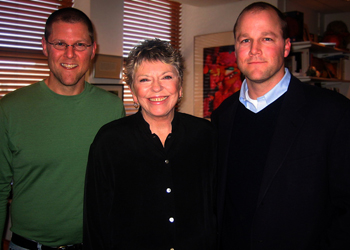
Christofer and I met on the 79th Street subway platform yesterday morning. Between the clatter of the train, and a gaggle of screaming high school kids, I was about as far from the bubbling tranquility of Utah as possible. We exited at 66th Street, walked to his parking garage, and loaded his truck with our gear: the Sony HDDV, twin light boxes, tripod, and AV bag. He began shooting as I drove us downtown to Linda Ellerbee's Soho offices. We circled 96 Morton Street three times before finding a parking place, unloaded, and stepped inside fifteen minutes early.

Linda's assistant, Holly, met us at the elevator, ushered us into Linda's office, then left us to our own devices.

Linda's office, a wide, sun-filled space dominated by two denim couches and a huge wooden desk, was littered with accumulation from an esteemed thirty-year career: a framed photo of her interviewing Fidel Castro, a print of her laughing uproariously with former Texas governor Ann Richards, a sign reading "Tradition is a thing of the past." On her desk, two computers (Mac and PC) rest amongst scattered newspapers, magazines, books, pens, and Post It notes. Next door, the conference room was stuffed to the gills with accolades: thirteen Emmy Awards, four Peabody Awards, and countless others. Chris set up the lights and mics, and set the shot. And then, reviewing our notes and prattling nervously amongst ourselves, we waited...

Soon enough, our ears became trained to the sound of the elevator doors. With each bell, our heads craned. Finally, we saw Linda striding down the hallway smiling broadly beneath hue, Jackie O sunglasses. I took a deep breath, and rose to shake her hand...

Ms. Ellerbee is a Texan. A sign on Linda's door read "Beware The Stinging Ellerbee." She is known for her intelligence, integrity, and wit. She was network news when network news still mattered, and has reams of awards lauding the concise, no-nonsense editorial, never condescending voice she cultivated there. And so, I did not expect her to suffer fools gladly. And while I don't consider myself a fool, I was resolved not to let lack of preparation or poise sideline our conversation. And while my trusty reporter's notebook (which I've used for every "Mister Rogers & Me" interview so far) was loaded with questions, I was hoping to have a conversation, not a Q&A.

Mission accomplished. Ms. Ellerbee was warm, witty, and right on target. She spoke in a hushed, almost reverent tone. She told us that Mister Rogers her hero, and that she frequently asked herself, "What would Mister Rogers do?" as she crafts her award winning "Nick News". She talked about depth and simplicity ("Simple, she said, "Is not the same as easy."), about the 24-hour news cycle, consumerism and technology with equal authority and expertise. She was emphatic, and passionate. And her eyes absolutely sparkled. I sat still in my seat across the desk, teetering between absolute inspiration and sheer terror, sneaking instantaneous peaks at my notes.

When asked how she seeks to still the din of our accelerated culture, Ms. Ellerbee told me that she goes for long hikes by herself, sometimes for a week at a time. After a few days in the mountains, or the desert, she said, all of the noise within and without fades, and she is left with the clarity and tranquility of her best inner voice. She began these solo sojourns, she said, while recovering from a bout with breast cancer.

When the interview was over, I asked her to pose for a photo, and sign my copy of "And So It Goes."

"Do you have my new book?" she asked, procuring a copy.

* * *

Back at my desk a few hours later, swept up in the chaos and frenzy of MTV News, I paused to crack the cover of "Take Big Bites: Adventures Around The World And Across The Table," and read her inscription.

"Benjamin," she wrote. "You're already on the path."

Thursday, January 11, 2007

A Deep & Simple "Companion"

Abbi and I were watching "A Prarie Home Companion" on demand when it hit me like a ton of bricks.

"We have to interview Garrison Keillor!"

As a Midwesterner, Mr. Keillor's show has been on my radio as long as I can remember. His dulcet baritone was constant companion in the numerous cross-country trips of my college years.

I've always appreciated the oasis of calm that exists on his air. There is no big city rush, no cacophony. His storytelling is patient and tempered, each tale invested with deeper meaning. He inspires. "A Prarie Home Companion" holds the increasingly rare distinction of tasting good, and being good.

I wrote the following in my Daily Journal upon seeing a living taping of Mr. Keillor's beloved radio show on Christmas Eve 2005:

    My mother, brother and I all live within a twelve block radius of one another now, which is primarily serendipity, not strategy. And though it facilitates seeing one another now and then, busy lives and the general good sense not to overdue it have limited such gathering to the "rare" to "very rare" file. Which is, in general, fine with me. This theater going experience, though, was in the "rarest of the rare" column. It was Christofer's idea.

    So there we were: a single mother and her two sons in the orchestra section of Town Hall enjoying Mr. Keilor's slice of Midwestern kitsch. Of course, it's not insignificant that Chris should take us there. The Midwest -- as a symbol -- has been lost to all three of us. For my mother, who grew up in Iowa, it is a different story, one I wouldn't feign to know or understand. But for me, the Midwest is a far-off place where, once upon a time amidst fireflies and crickets, everything was deep and simple. I tune into "A Prarie Home Companion" and, through Mr. Keillor's Lake Woebegone tales, endeavor to return to that quieter, more tranquil time. I imagine Chris does too.

    It was a fairly magical Christmas gift to hear my brother laughing so deeply, and to hear my mother singing so clearly. It was a fairly magical Christmas gift to sing "Silent Night" with 1500 New Yorkers. And it was a fairly magical Christmas gift to hear 75-year-old folk legend Odetta read this poem aloud:

      Our deepest fear is not that we are inadequate. Our deepest fear is that we are powerful beyond measure. It is our light, not our darkness, that most frightens us.

      We ask ourselves, who am I to be brilliant, gorgeous, talented and fabulous? Actually, who are you not to be?

      You are a child of God.

      Your playing small does not serve the world. There is nothing enlightened about shrinking so that other people won't feel insecure about you. We are all meant to shine, as children do. We were born to manifest the glory of God that is within us.

      It's not just in some of us; it's in everyone.

      And as we let our own light shine, we unconsciously give other people permission to do the same. As we are liberated from our own fear, our presence automatically liberates others.

    Standing there in her white knit dress, funky beret and multi-color scarf, this frail, soulful woman led the audience -- né, this congregation -- through four verses of "This Little Light Of Mine," then shuffled off, leaving us all to bask in the glow of our collective brilliance.

And so, with an assist from my colleague, MTV News Talent Coordinator Alyssa Vitrano (who dug up Mr. Keillor's contact information), I called Minneapolis this afternoon. And while I was nervous, hurried, and unrehearsed, Prairie Home Production publicist, Katrina Cicala, was poised, patient, warm.

"Take your time," she said. "I love a good story."

Katrina seemed optimistic following my brief description of the project.

"Sounds great," she said. "I love Mister Rogers."

I followed our brief conversation with the following email:

    Much of Mister Rogers' "deep and simple" ethos -- a phrase he plucked from author/activist/mystic (and friend) Bo Lozoff's book, "Deep & Simple" -- was based on his unique perspective as a Presbyterian minister, and as a participant, observer and activist within our accelerated media culture. Thus far, we've interviewed journalists Susan Stamberg, Tim Russert and Linda Ellerbee, authors Marc Brown, Tim Madigan, and Amy Hollingsworth, and Mr. Lozoff to that end. In the next few months, we plan to speak with Bill Moyers, Yo Yo Ma, and -- hopefully -- Mr. Keillor.

    Mr. Keillor's work has been a constant source of deep insight, simple joy, and profound inspiration for myself, and millions like me. "A Prairie Home Companion" is an oasis of substance amidst the vacuous folly of an accelerated culture. To that end, we seek Mr. Keillor's answers to questions such as: "Has American culture become shallow and complex?" "How does media and consumer culture conspire against depth and simplicity?" And "To whom does culture look for deep and simple inspiration and guidance?" Not to mention, "Did you ever cross paths with Fred Rogers?" And "From where do you personally draw you depth and substance?"
So... listen up when those ton of bricks hit. All that weight might mean something, and might turn out better than you think. I'm hoping so anyway.

Found!

I'm a big fan of "This American Life." If you don't know it, you should. It's a Public Radio show out of WBEZ in Chicago. Just as its creators describe it, "This American Life" is "like movies for radio." I love the patient, deliberately thematic storytelling. And I love host Ira Glass' voice, and sense of humor.

I was asonished, then, when, last summer, I heard a promo for the show teasing a segment on a young man's friendship with Mister Rogers.

'That's my story,' I thought. Still, I eagerly tuned in.

The story begins in the mid-Seventies when Davy Rothbart's little brother writes to Mister Rogers. Both kids are astounded when Mister Rogers writes back two weeks later. They arrange to meet him later that summer in Nantucket. Twenty years later, Davy visits Mister Rogers in Pittsburgh.

"When you talk with him," Davy says, "he's utterly engaged. He asks a lot of questions, and he seems to actually care what you say. He let's his feelings come right to the surface. I've never been around someone who's both so vulnerable, and so fearless about showing you who he is."

Fast forward to this afternoon. Two weeks into the new year, I decide to jump starting the doc. So I Google Davy.

Ends up, Davey Rothbart is the founder of a small, Dave Eggers-style creative empire. He's the founder Found Magazine (which I've long known of), the author of "The Lone Surfer Of Kansas, Montana," and -- ends up -- a frequent contributor to "This American Life."

So I start to try to tack him down in Ann Arbor, Michigan. I call directory assistance, and call the number. Disconnected. I try his production company, 21 Balloons. No answer. Then I try Found.

"Hello, Found."

"Is Davy there?"

"Um, this is an antique shop. But we carry the magazine and the book."

"Oh, I'm sorry. I'm calling from MTV News in New York."

"MTV! Wow! Well, well, um... I think the people downstairs know his number. If you give me your number, I can call you back with his."

Two minutes later, she calls.

"The people downstairs didn't want to give me his number but they said they'd call him and give him yours."

Two minutes later, Davy Rothbarth calls.

"Only in the Midwest!" I answer, explaining the circuitous nature of our being connected. Then I tell him that my family rented the cottage next door to Mister Rogers, and that I heard his "This American Life" segment, and that I'd love to interview him for my documentary.

"Sure!" he says. "I got mad love for Mister Rogers."